

Food cost percentage is the single most important financial metric in any restaurant. Yet more than half of independent operators calculate it wrong — and make bad decisions as a result.
Here is the correct formula, the three most common mistakes, and how to use food cost data to actually improve your business.
The Correct Formula
Let us start with the formula you will use every month:
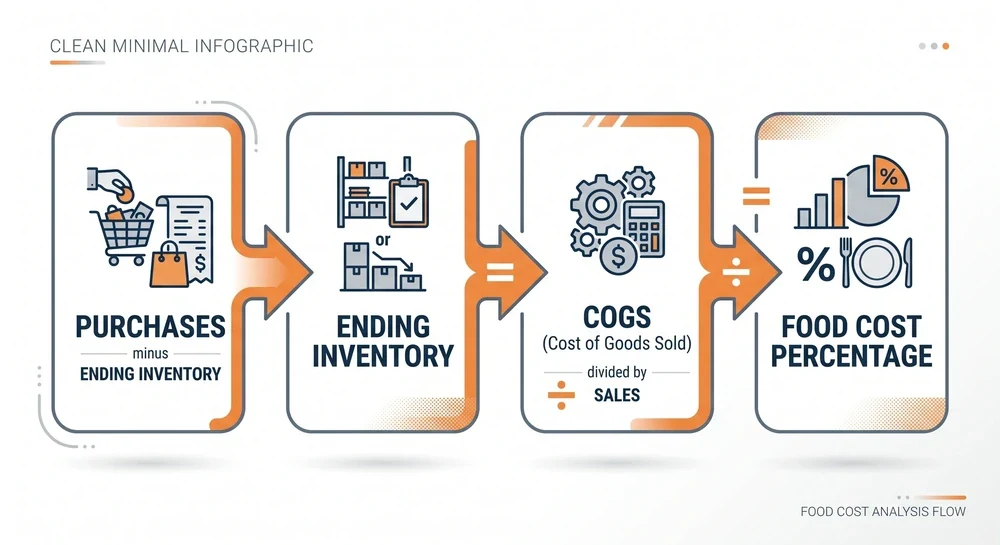
Food Cost % = (Beginning Inventory + Purchases − Ending Inventory) ÷ Food Sales × 100
Let us break down each component:
Beginning Inventory: The total value of all food in your kitchen at the start of the period (e.g., the 1st of the month).
Purchases: All food and beverage purchases made during the period. Do not include non-food items like cleaning supplies or takeaway packaging.
Ending Inventory: The total value of all food remaining at the end of the period (e.g., the last day of the month).
Food Sales: Total revenue from food sales only. Exclude beverage sales if you track them separately.
Example: If you started the month with €5,000 in inventory, purchased €15,000 worth of food, ended with €4,000, and had €50,000 in food sales:
Food Cost % = (€5,000 + €15,000 − €4,000) ÷ €50,000 × 100
Food Cost % = €16,000 ÷ €50,000 × 100
Food Cost % = 32%
A food cost percentage of 28-32% is considered healthy for most restaurant types. Fine dining may run higher (35-40%), while quick service can be lower (25-30%).
Mistake #1: Using Recipe Cost Instead of Actual Cost
This is the most common error. Many operators calculate their theoretical food cost from recipes, then assume that is their real cost. It is not. Your actual food cost includes:
Waste: Trim loss, overcooked items, dropped food, expired stock. This alone adds 3-8% to your food cost.
Theft: Unfortunately, it happens. Portion size creep, unrecorded meals, and outright theft.
Invoice variance: You ordered 10 kg of chicken but were charged for 11 kg. Are you checking?
Freebies: Staff meals, comped dishes for unhappy customers, "taste tests" for the chef.
⚠️ Warning: Your actual food cost will always be higher than your theoretical (recipe) food cost. A gap of 3-5% is normal. A gap of 8%+ means you have a waste or theft problem that needs immediate attention.
Mistake #2: Not Including All Purchases
It is easy to forget the small purchases — the herbs from the local market, the specialty cheese from the artisan supplier, the olive oil from the deli. If you do not include every single food purchase, your number will be artificially low and your pricing will be wrong.
Solution: Keep a single food purchases account in your accounting software. Every single food item that enters the building gets coded to this account. No exceptions.
Mistake #3: Inconsistent Inventory Valuation
How you value your inventory matters. If you use purchase price for the same item that was bought at different prices across the month, your number will fluctuate for the wrong reasons.
Use the weighted average cost method:
Weighted Avg Cost = Total Cost of Stock on Hand ÷ Total Units on Hand

Example: You have 10 kg of chicken breast.
  - 5 kg bought at €8.50/kg = €42.50
  - 5 kg bought at €9.20/kg = €46.00
  Weighted Avg = (€42.50 + €46.00) ÷ 10 kg = €8.85/kg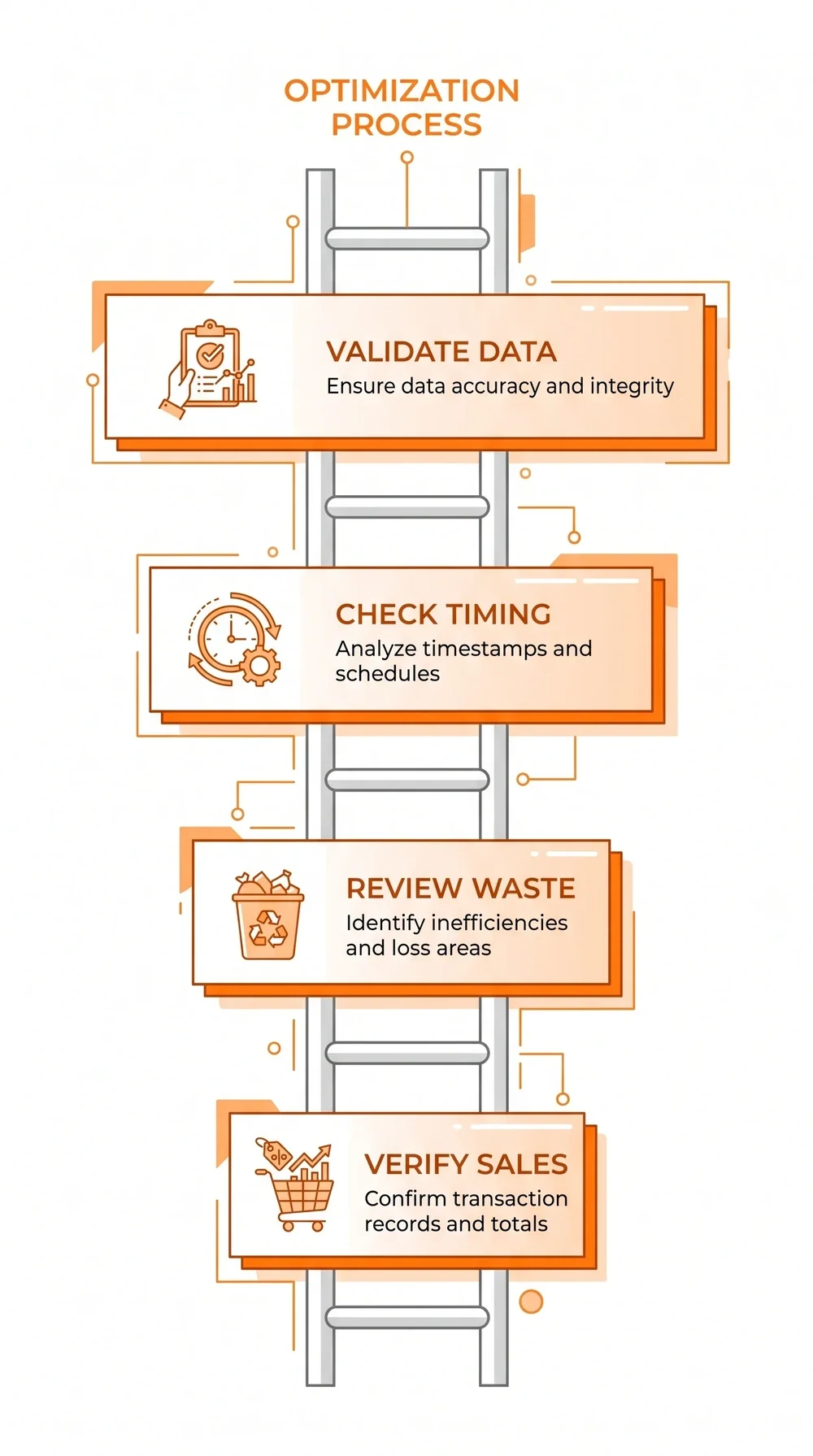
How to Use Food Cost Data
Once you have an accurate food cost percentage, use it to:
Price your menu correctly. If a dish has a 38% food cost and your target is 30%, it needs to be repriced or re-engineered.
Identify waste hotspots. If your food cost spikes in a particular week, check the daily par counts for that period. What went wrong?
Evaluate menu performance. Compare food cost by category. Are your appetisers profitable? Is the steak section dragging down margins?
Set par levels. Use your monthly data to set accurate par levels and reduce over-ordering.
The bottom line: Accurate food cost calculation is not accounting busywork. It is the difference between a restaurant that survives its first year and one that thrives. Get it right from day one.


Responses (0)